Geumgang = Geum River = Silk River
錦江 / 금강 / geumgang
錦 / 금 / geum = silk
江 / 강 / gang = river
NB: There's another geumgang, though, spelled the same in Korean (which is an alphabet), but with different Sino-Korean (i.e. Chinese) characters. This geumgang means "diamond."
金剛 / 금강 / geumgang = diamond
金 / 금 / geum = metal/gold
剛 / 강 / gang = tough, strong, upright
金剛經 / 금강경 / Geumgangyeong = Diamond Sutra
__________
I'm now in the naughtily named Coupling Motel, in a room with a bed for W50,000 a night. For that price, I expect a smart toilet so I can wash my bum and jewels, but no: the room is just a slightly nicer version of yesterday's room. Still, I can't complain. There's WiFi.
Fortunately or unfortunately, I have other things to complain about. The day seemed to start well: I was up before 4 after a fitful-yet-restful night's sleep, and I was out the door into the cold morning before 4:30 a.m. As I was walking along the back alley toward the main street, a cab suddenly stopped right in front of me, so I got in and thanked the driver. But when I told him to take me to Daecheong Dam, he suddenly balked and started babbling some bullshit about how 4 a.m. was actually his 퇴근시간/toegeun shigan (time to leave work), and as a result, he couldn't go that way. The old cabbie's explanation sounded desperate, and I was mad because this cabbie didn't start balking until after I had dumped my backpack into his car's trunk, so now I had to retrieve my backpack and leave the car. Steaming but suppressing some loud and probably inadvisable speech, I got out and yanked my backpack from out of the trunk.
The second cabbie was worse. I think he was stupid and lazy (the first cabbie struck me as lazy, too); to be fair, he probably thought I was some foreign idiot. But I'm not sure where I went wrong. I've had plenty of clear, coherent conversations with cab drivers over the years. I told the second cabbie where I was going and why; I even showed him on my phone's map what the route would be. But like an idiot, he said, "But according to your map, that's the endpoint. You're saying it's the starting point." So as if to a retarded person, I re-explained that the route currently being shown was from where we were, by Shintanjin Station, to where I needed to go, i.e., the Daecheong Dam Certification Center. After I got out, the certification center would become the starting point for my WALK. He still didn't understand the concept of beginnings and endings. I put my map in "drive" mode and showed the cabbie the route via car (not via bike or walking) so he could see that it was drivable. I said that it looked as though he would have to cross the Geum River twice to reach my destination, only 5 km away. He protested that he never took such a route to reach the dam, and he kept peppering me with why and how and what questions. By this point, it was obvious he just didn't want to drive me for whatever reason. I told him he was free to take me to the dam and drop me anywhere near it, and I could find the certification center myself. I added that I trusted his ability to find the way since he knew the area while I didn't. At that, he became passionate about why that wasn't a good idea ("그렇게 하면 안돼!") and said other things I didn't understand, so I asked him whether he even knew where Daecheong Dam was (of course he knew where it was: the fucker lives here, and he'd just said he'd driven there before!). He avoided saying yes or no, so I finally got angry and cornered him like a lawyer or a police interrogator: "Do you know where the dam is or not?" And lazy-ass liar that he was, the dumb shit firmly said, "No." You should know that, on the street right in front of the taxi, there was a large, painted label, with a painted directional arrow, that said, "Daecheong Dam." If the guy can't follow a large arrow, he's in trouble. So none of this was really about his stupidity (but I still came away thinking he was fucking stupid); it was about his stubborn, lazy refusal to drive me anywhere. He just wanted me out of his car.
Ideally, both cabbies should've acted like professionals. They should have entered my destination into their GPS, then followed the indicated route without question—only 5 km to my destination.
But customer service isn't a widespread concept in Korea. You can get it in some corners, but more often than not, the customer, especially if he's a foreigner, is wrong. And that's what I was dealing with here. I stifled the urge to call the guy a stupid son of a bitch, asked him to open the trunk as I had with the first resistant cabbie, and stepped out into the early-morning darkness, once again rideless.
I was mad. I wanted to hurt someone. It later occurred to me that both cabbies might have thought the same thing: That by asking them to go to a quiet and empty place like Daecheong Dam, I was asking them to become human sacrifices in my imagined murder spree. Maybe that's what they think after seeing too much Johnny Somali on TV: All Americans are crazy-eyed killers and rapists. Of course, who really knows what the cabbies had been thinking? From my perspective, I wasn't seeing much intellectual candlepower from either guy. I had even asked the second cabbie to enter "Daecheong Dam Certification Center/대청댐 인증센터" into his GPS, and he refused (because we're Korean, and we despise simple, obvious solutions to anything!).
Too furious, now, to think about starting at the proper starting point, I knew I was already close to the river, so I angrily decided to start my walk right there. Which means I didn't do the first 7-10 kilometers of the path. Fuck. (NB: It would've been a 5K drive to the starting point via the roads, but it would've been a 7-10K walk along the path to get back to the Shintanjin Station area. In case you were wondering about discrepancies in distance.)
The next few hours of walking went well enough, I guess. The route has a lot more little rises and dips than other routes except for the east-coast trail, which is surprisingly hilly. There's also a good bit more pollution along this trail, but I grant that I was in a pissy mood and may have been predisposed to see whatever my brooding mind wanted to see. I did photograph a lot of litter, though, which you'll see when I upload more than just the ten images you're getting today.
Still miffed but feeling slightly better by about 1:30 or 2 p.m., my mood was soured again when a plump high schooler rolled up to me on his bike, cheerfully shouting in English from far away, "Grandfather! Grandfather!"—then when he got up close, "Where are you from?" I gruffly demanded to know if the kid had just called me "grandfather," and he nodded vigorously, smiling like a retard (in fact, I did briefly wonder, when I curtly talked with him, whether the kid was mentally slow). In Korea, it's fine to address older folks as "grandfather" or "grandmother," but I'm not sure that the etiquette extends to people you don't know, and who remain at a distance. And I don't think I've ever heard anyone shout, "Hey, old person!" to a stranger as a term of respect in Korea. So I felt deeply insulted and told the kid to just go after I'd given him a sour face.
Things didn't turn around until I was resting near the end of the route, and an older gent rode up to me on an official-looking moped. We engaged in friendly conversation; the man said nothing rude. He told me he had passed me four times and had wondered what I was doing. So I told him about the various walks I had done and about my recent medical history, which includes a stroke and a heart attack. As with the friendly cabbie on Day 0, I understood him, he understood me, and there were no communication breakdowns. That's why I found it hard to believe that the morning's fuckups had been my fault. I remain convinced that I had just been dealing with assholes.
So the last part of today's slow walk went by with me in a much better mood. I found my naughtily named motel, went to the restaurant next door, slipped over to the convenience store, bought some drinks and snacks for the next two days, then schlepped back to the motel.
Below are my stats (ignore the pedometer's distance, but trust the number of steps), the day's map, and ten images picked from the hundreds that will eventually appear once my trip is over. Enjoy.
 |
| early-morning cityscape |
 |
| If I can't have shaman spiders this season, Lord, please at least give me abandoned gloves. |
 |
| Porta-Johns in a country where people still know which restroom to enter. |
 |
| Please explain how bikes absolutely must slow down while no bikes are allowed. |
 |
| In a land where everything is backward, "No, oh!" is de rigueur. |
 |
| the hovel |
 |
| I'd love to know the story behind this tragic scene. |
 |
| think Fibonacci thoughts |
 |
| Tributes to bikes and bikers are all along these major trails. |
 |
| afternoon sun |
PHOTO ESSAY
 |
| My Day 0 motel, the Haengbok-jang. (haengbok = happiness, good fortune) |
 |
| 4:25 a.m. I guess she's showering. Where's the sculpted bar of soap? |
Between the above pic and the one below, the incidents with the two cabbies happened.
 |
| 4:55 a.m. I've started walking from this point instead of starting at Daecheong Dam. |
 |
| Wheel/bicycle motifs are common for bike-path fences. |
 |
| The actual bike path is down the berm. |
 |
| I'm down the berm. On I go. |
 |
| one of those LED displays that change color |
 |
| Hyeondo-gyo/현도교 (Hyeondo Bridge) coming up |
 |
| I pass under the bridge, which I'm going to have to cross. |
 |
| turning left |
 |
| the stairs up (and a narrow track, right side, for bikes to be pushed up) |
 |
| greeting me at the top of the stairs |
 |
| crossing the bridge |
 |
| enjoy the fog |
 |
| looking back at this section of Daejeon |
 |
| moving carefully in the dark through a parking lot |
 |
| 139K to the goal |
 |
| crossing |
 |
| moving downhill and through a short tunnel |
 |
| one of several shwimteo |
The verb shwida/쉬다 means "to rest." You can make the verb into a gerund by adding the Korean letter m (ㅁ) to the verb's base (shwi/쉬), so shwida becomes shwim, i.e., to rest becomes resting. The word teo/터 (pronounced somewhere between "taw" and "tuh," not "tee-oh") is often used to describe an area or a place with a particular function, e.g., a noriteo/놀이터 is a playground, which calls up mental images of slides and swings, etc. So a shwimteo, then, is literally a "place for resting." It's a pavilion-like or gazebo-like structure, often with benches or a flat, raised space underneath the roof, used for just lounging about. Shwimteo have been a saving grace for me on these walks—places where I can just collapse and take breathers for a few minutes before moving on.
 |
| quiet neighborhood |
 |
| bus stop at the village of Yangji-ri |
It's a different pair of homophonic Chinese characters, but there's a yangji that means "brisket."
Heh. Brisket Village.
 |
| I always wonder what it's like inside these. |
 |
| Ugh. Sorry for the blur. Must be the cocaine. |
 |
| I used to be good about doing at least one shadow pic every day of a hike. |
 |
| It's never completely dark. Geumgang #1 Bridge way up ahead. (Not the tunnel.) |
 |
| 'nuther tunnel |
 |
| passing under Geumgang #1 Bridge (Geumgang 1-gyo/금강1교) |
 |
| a winter field, soon to be tilled and planted as the weather warms |
 |
| Sometimes, all you've got are the lights. |
 |
| —which can be eerie. |
 |
| Ah. My obsession appears. |
I have so many glove photos that I should start a gallery. Or another Substack page.
 |
| looking down the berm to the lower path |
 |
| a slight rise |
 |
| one of many such covered areas found on Korean farms everywhere |
 |
| Can bikes go along the left path or not? |
 |
| I'm going along the left path. |
 |
| faerie lights in the ground, guiding me |
 |
| more winter fields (and that's neither the sun nor the moon—just a light) |
 |
| Which is nicer—the bike path or the pedestrian path? |
In almost all cases, the bike path is better maintained. There are rare exceptions.
 |
| Did I mention that it's fookin' cold at this time of day? 6:26 a.m. The sun's coming out. |
 |
| bleakness |
 |
| The temperatures won't rise, though, for a couple of hours, even with daylight. |
 |
| too small for Tom Cruise's F-14 |
 |
| Once in a while, I just have to photograph wreckage. |
 |
| into the misty mystery |
 |
| maybe the end of a culvert, draining toward the river |
 |
| Bridges can be frosty. |
 |
| Please do not bathe there. |
 |
| a wider shot |
 |
| gloomy straightaway |
 |
| a collapsed Sejong City marker |
 |
| now passing an "auto campground" (oto kaemping-jang/오토캠핑장) |
 |
| admin building on the premises |
 |
| note to cars to stay under 20 kph inside the campground |
 |
| restrooms, restrooms, restrooms |
 |
| "(red) Camping car, caravan; (black) water-collection area; sewage-disposal area" |
 |
| Trees guarding empty lots; it's not quite camping season for most timid folks. |
 |
| There are some intrepid people out here, though. But the camping experience is lame, I'd wager. |
I don't consider this sort of place to be real camping. But I'm a bit of a snob.
 |
| more lots and berths |
 |
| approaching the campground's periphery |
 |
| Instead of going forward, I'll be taking the ramp off to the right, then U-turning and following the upper path. |
 |
| up the ramp |
 |
| Actually, there's no path for pedestrians, so I'm following this road for a bit. |
 |
| Once again: Are bikes allowed or not? |
 |
7% downhill grade ("Steep slope")
at bottom: "Absolutely reduce speed" |
 |
| Down I go. |
 |
| "No bikes"? Really? This is a bike path. |
 |
The right-hand sign says "No passage in case of snow or ice."
painted on the ground: "Sharp curve. Steep slope. Slow." |
 |
| building with its dong hanging out |
 |
| So naughty! |
 |
| pedestrian lane on the right |
 |
| 7:38 a.m. |
 |
There are many boardwalks.
The yellow sign warns motor vehicles not to pass this way. |
 |
| Same deal: "Sharp curve. Steep slope. Slow." |
I suppose these signs make more sense to bikers, whose speed would make these curves sharp. For me as a walker, though, there's nothing sharp or steep going on. But I am walking slowly.
 |
| slowly rotting |
 |
| Bracket fungi in Korea are all small. |
 |
| —but they do get everywhere eventually. |
 |
| Along the quiet boardwalk. No bikers thus far. Nobody at all. |
 |
| the closest thing to a straightaway in this section |
 |
| The fog hasn't lifted yet. |
 |
| small bridge |
 |
| ambience un peu maréchale |
 |
| The sun hasn't quite won its battle yet. |
 |
| A tributary drains into the river. |
 |
| orchard at the tail-end of winter |
 |
| bleak, cold, lonely, but no smell of horse manure |
 |
| a stone I'll be seeing often on the trail, colored and uncolored |
The Korean on the stone says 금강 종주 자전거길/Geumgang Jongju Jajeongeo-gil, or Geum River Traverse Bike Path. A jongju, as explained here, was traditionally an end-to-end path across a mountain range, but the term seems to have been widened to include end-to-end paths—generally long ones, but not always—connecting extreme destinations for bikers and walkers. What I find interesting is that the marker merely says jongju and not Gukto-jongju, which would signify a national path.
 |
| I guess I know where I am. |
 |
| The fog continues. |
 |
| Now entering Cheongju City (Cheongju-si/청주시). |
A city I pass while walking the Four Rivers Path is Chungju, which I normally romanize—inelegantly—as Choongju to clarify how to pronounce the first vowel sound. The eo in Cheongju is pronounced somewhere between an "aw" and an "uh." As my boss described it, it's a bit like the eo in George. Depending on your dialect, I guess; George can be pronounced several different ways.
 |
| up a gentle hill |
 |
| "No, oh!" |
In the 1990s, an English colleague of mine joked that, long ago, a Korean and a Westerner made a pact: they would each walk in the opposite direction—the Westerner going west and the Korean going east—and do the opposite of whatever the other did. This is why we say "3 p.m." while Koreans say "p.m. 3"; it's why we say "page 205" while Koreans say "205 page"; it's why we say "I go to school" and Koreans say "to school go"; it's why we say "north, south, east west" while Koreans say "east, west, south, north." I hope that puts "No, oh!" in context.
Unless you read the letters like classical Chinese—in columns, and from right to left.
 |
| fuller context |
 |
| looking down the trail |
 |
| looking over at some guys |
 |
| This place is labeled as a shwimteo, a rest area, but it's closed and locked. |

Above, the yellow sign advertises those hangari (large, earthenware pots). Some are for barbecue (see the vents on the bottom?); some are merely for landscaping (i.e., decorative, I guess); some are for salt, and some are "eco-friendly" or "pollution-free," whatever that means.
 |
| Looks like a combination of a Korean house and a garage. |
 |
| tower/silo looms in the mist |
 |
| Its mammoth presence will not be denied. |
 |
| "Danger! Watch out for large vehicles. Sejong Dam Certification Center, 14 km. Hapgang Park Certification Center, 22 km." |
I missed one of those cert centers.
 |
| more farm-y shelters holding mysterious items |
 |
| Gotta love the dilapidation. What Americans mean when they say, "It has character." |
 |
| village in the mist, but no gorillas |
 |
| train tracks on the other side of the wall |
 |
| guess I'm going left |
 |
| Captain's log |
 |
| more of the little fellows (bracket fungi) |
 |
| heading down |
 |
| into the silence |
 |
| the tragedy of the Porta-John |
Did you ever see the Jackass where Steve-O gets launched into the air while he's inside a Porta-John with a full tank of human waste ("Poo Cocktail Supreme")? If not, watch this. I couldn't help thinking of poor Steve-O when I saw the above tableau.
 |
| more dilapidation |
 |
| an unnecessary but slightly closer look |
 |
| quiet straightaway |
 |
| more farm mysteries |
 |
| Won't be resting at this shwimteo, which looks occupied. |
 |
| Hope springs eternal. |
 |
| buckets and buckets |
 |
| onward and slightly upward |
 |
| painted surfaces can get slippery |
 |
| 132K to the very end of the trail, the Geumgang Estuary Barrage |
 |
| I think that says 등곡교/Deunggok-gyo, or Wisteria Valley Bridge. |
 |
| We cross. |
 |
| Hello, peasants below me! |
 |
| Boardwalk straightaway... and it's still gloomy. |
 |
| Who uses these places? |
 |
| wide shot for context |
 |
| onward |
 |
| more pre-tilling fields |
 |
| another abandoned glove |
 |
| its companion |
 |
| the fuckin' litter |
While I see litter on all of the trails I do, there seemed to be an especially large amount of it this time.
 |
| swinging right |
 |
| Maybe the fog is lifting if the far shore is that visible...? |
 |
| a cosmic deity appears |
 |
| the deity and its reflection |
 |
| I stop to rest at this shwimteo. |
 |
| a photo in appreciation of the rest provided |
 |
| public storage, but for only one person? |
 |
부용교/Buyong-gyo (Buyong Bridge): 2.7 km
등곡리 버스 정류장/Deungok-li beos jeongruyjang (Wisteria Valley Village Bus Stop): 1.8 km
(vertical writing) 12 Gudan Bidangang-gil (some kind of street or road) |
 |
| 9:26 a.m.—looking and feeling a little out of it |
I was still out of sorts from how the morning had started, and several kilometers of walking hadn't changed that. Most of my interactions with cabbies, I'd say around 95%, are just fine. I just tell them my destination, and they take me there. To encounter two instances of stubbornness, laziness, and stupidity one after the other, well, that came as a rude shock.
 |
| Did it survive the nighttime and morning freeze? |
 |
| old signal-fire beacon or pizza oven? |
 |
| The day is finally clearing up, and temps are going up as well. |
 |
| Soon, it will be warm enough to have to shed some layers. |
 |
| vista |
 |
| always better to go downhill than uphill |
 |
| Alas, there are uphill portions. |
 |
| "no cultivation" signs in the center (ground); "for bike use" sign (blue) on the left |
 |
| back up to road level |
 |
| a typically low Korean mountain |
Low, rounded mountains, like those found in Korea and in the Appalachians, indicate how ancient they are: they've had time to be eroded. Ranges like the Swiss Alps and the Rockies and the Himalayas, jutting out so proudly and arrogantly, are young pups by comparison.
 |
| Eh bien, continuons. |
 |
| humble shwimteo in the distance |
 |
| a closer look |
 |
| road, path, river—all parallel |
 |
| stairs down to undeveloped land |
 |
| interesting place to abandon one's work gloves |
This type of work glove is partially dipped in rubber to aid in gripping things as you lift.
 |
| da crick |
 |
| a "don't lean" warning next to the consequences of leaning |
 |
| Walking just comes down to eating up distance. |
 |
| Something electric is happening here. |
 |
| Dilapidation! |
 |
| no escaping the litter |
 |
| creative disposal, but still litter |
 |
| Christ |
 |
| tossed-away banner of some sort |
 |
| another one of those stones (I promise I didn't photograph them all) |
 |
| relentlessly forward, not stopping at the benches, however tempting they might be |
I think, by this point, I had shed my thicker layers and was wearing my wide-brimmed hat.
 |
| I could hear a dog barking from this property. |
 |
| the arfer himself |
 |
| Buyong-gyo (Buyong Bridge)—remember the sign from back a ways? |
 |
| Koreans do seem to favor this kind of single-tower suspension design. |
 |
| under the armpit |
 |
| 11:09 a.m.—pastoral scene (so nice not to be foggy) |
 |
| hope for spring |
 |
| This looks like a nice spot to rest, but I don't rest here. |
 |
| the sticks: Korean equivalent of cars up on cinder blocks |
 |
| no escaping the exercise equipment |
On the whole, Koreans take physical activity a lot more seriously than Americans do.
 |
| new, fresh paint... a sad future awaits |
 |
| 11:14 a.m.—a restaurant specializing in beef-rib soup and "cow's head" soup |
 |
| Alas, I'm not stopping at the resto, either. Just moving on. |
One of the most painful aspects of walking relates to timing: I might arrive at a tempting rest area, but I just rested three kilometers ago. Or I might pass by a tempting-looking restaurant, but it's 9:30 a.m., i.e., not time for lunch. I've sadly walked past a lot of spots I've wanted to sit down and enjoy, but I'm kind of on a schedule when I walk, and I have only so much time and energy to devote to my route. Extending my time by stopping and eating means walking on a full stomach afterward, which in turn means risking angina in my case, so I generally eat after I'm done walking (although I might snack lightly along the way). Resting too long or too often means arriving at my day's final destination later than anticipated, which in turn means less time to wash and dry clothes, write up my blog entries, use the toilet, shower, and get to sleep. Every morning, I try to wake up at 4 a.m. unless I know the day's route is particularly short (under 20K). On short days, I wake up later and take it slow. Otherwise, I need my sleep. Basically, there's a certain ruthless logic at work whenever I walk, and my schedule has become more difficult as I've started to walk more and more slowly over the years and as my health has deteriorated. The same things now take more time. On most of my cross-country walks, my daily distance average is anywhere from 26 to 28 km. This walk, when I planned it, was slightly below that at 25K. But it felt like more of an effort, probably because of both my backpack and my extra body weight. There are walkers out there who easily do 60K a day. Wow.
 |
| park-golf course |
 |
| restroom (didn't use, didn't need) |
 |
| ever onward |
 |
| Exiled chairs... but at least, they're not tied or chained to trees. |
 |
| the dirtier, less-well-maintained pedestrian path |
 |
| We press on. |
 |
| stairs |
 |
| more stairs |
 |
| Hwangseong-gol, Geumho 3-ni (Geumho 3rd Village) |
 |
| staring at stairs |
 |
| crawling along |
 |
| but one last, obsessive look at the stairs |
 |
| Geumho 3rd Village bus stop |
 |
| not-quite-classic shwimteo |
 |
| on to Sejong City (in the distance?) |
 |
| a final glimpse of that shwimteo |
 |
| Another park-golf course. Yay. |
 |
| a series of sports fields |
 |
| passing by the athleticism |
 |
| soccer field |
 |
| baseball |
 |
| Typical of bike paths on berms, there are often ramps. |
 |
| See the bridge in the distance? I'm heading that way as the river curves left. |
 |
| ain't no avoiding it |
 |
| Even if you don't read Korean, you get the red color and the "no swimming" icon. |
 |
| a shortcut for vehicles going somewhere, I presume |
 |
| Recent use of the word "silo" as both a noun and a verb has been intriguing. |
 |
| stacked and colorful |
 |
| I'm getting an almost airport-y vibe. |
 |
| There goes a vehicle across the presumed shortcut. |
 |
| Sejong City bus parked behind some kind of resort hotel, the Otium. (Ah—it's a wedding hall.) |
Interesting to call a wedding hall the Otium since odium means "hatred" or "hatefulness."
What's always interesting is hearing the thinking process behind how places and things get their Konglish names. The thinking, when you hear it, often makes a bizarre kind of sense, but the way the sounds are put together to create the Konglish expression feels entirely alien.
 |
| "Straight away, sir." |
 |
| looking left |
 |
| The AI god tells me this could be a cement-processing plant. |
 |
| Someone rides by. A rarity so far today. |
 |
| looking plantward |
 |
| colorful tank |
 |
| The bridge creeps closer. |
 |
| a necessary footbridge |
 |
| I always feel a bit guilty photographing these vehicles and their drivers. |
 |
| a pile of raw material (or my latest, prodigious dump) |
 |
| signage |
 |
| Bugang Bridge (Bugang-gyo) |
Many or most bridges, big and small, are named in Korea, but some bridges are nameless.
 |
| across we go |
 |
| I decide to stop and rest a bit here. 12:08 p.m. |
 |
| a little boardwalk action coming up |
 |
| Don't you mean "ground"? Probably an indoor sign expropriated for the outdoors. |
 |
| leaning layers of rock that may have started life horizontal... before The Upheaval |
 |
| I see faces. |
 |
| walkin' them boards |
 |
| another little bit of civilization coming up |
Really, on a peninsula as densely populated as the Korean Peninsula, you're never far from civilization no matter where you go.
 |
| Basically, "No passage when the weather is severe." |
 |
| solar collector |
 |
| Persian speedwell (Veronica persica) |
 |
| atop the rise, what I assume is a nice view |
 |
| ads/menus for various eateries |
The building provides a nice view of the river from up there, so it might also serve as a guest house or pension, but that's only a guess. Another missed opportunity for me, given the menu, which includes Korean-style pork schnitzel, fried rice, desserts, and drinks.
 |
| 12:45 pm.—Geumgang Rail Bridge (Geumgang-cheolgyo/금강철교) up ahead |
 |
| looking back |
 |
| not stopping at this shwimteo |
 |
| forging ahead |
 |
| picnic park with numbered spots for people wanting to grill |
 |
| where to toss your ash after grilling |
 |
| Geumbit noeul-gyo (금빛노을교, Golden Sunset Bridge) |
 |
| Sometimes, it's all about the colors. |
 |
| Sometimes, it's the colors plus the angles. Geometry. |
 |
| Perspective! |
 |
| I had no reason to go up that way, so I didn't. |
 |
| camp store |
 |
| the grounds |
 |
| Bushy-bush... but what kind? |
 |
| AI suggests this is a dried Rose of Sharon... makes sense given the bush's shape. |
The Rose of Sharon, or mugunghwa/무궁화 ("moo-goong-hwah") in Korean, is the South Korean national flower. When I normally do these long walks in the fall, the mugunghwa are in full bloom. They're a July-October flower, summer-fall.
 |
| dem blue buildings |
 |
| construction |
 |
| derrick |
 |
| coming up: the Aramchan-gyo/아람찬교 (Aramchan Bridge) |
 |
| Life is often about crossing under bridges. |
 |
| heading in the direction of Sejong Dam (but I don't recall seeing it) |
My stopping points were a little weird on the first day of the walk, and I had originally planned each day to include a swing-by of the given landmark's certification center. For most of my stops, the landmarks were dams, and the cert centers are normally right next to them. But because I had decided to forgo the cert centers, having figured out early that this walk was a lost cause, I basically walked from lodging to lodging, which means I often diverted from the bike path to be able to shack up somewhere. So, on this abortive trip, I missed a large part of what draws me to these walks: the dams, which are impressive examples of Korean engineering.
 |
| Pylon #6 |
 |
| peekaboo (and look at the funky shape of the drainpipe, and the spiral staircase in the distance) |
Alas, the incident with the possibly retarded kid happened right at this bridge (Aramchan). When the kid and I parted ways, I was once again left steaming and grumbling. But now that I'm writing this days later, I've since come to repent of my behavior toward the kid, who deserved better from a "grandfather." There's always more room to learn and grow.
 |
| moving on, with the usual cautions up ahead |
 |
| stairs to some kind of lookout point, but I didn't go up |
 |
| I'm not sure, but the hanja (Sino-Korean characters) seem to say Hapgang-something. |
 |
| Is that Hapgang Go, as in River Confluence Height? I really can't tell. |
Normally, a confluence of watercourses is called a hamnyubu (합류부), from hap/합/合 + ryu/류/流 + bu/부/部 = together-flow-part/portion/region, "the region where X and Y flow together."
 |
| parkland that thankfully wasn't turned into yet another park-golf course |
 |
| just enjoy the scenery |
 |
| You can tell that spring hasn't quite sprung yet. |
 |
| "Geum River and Miho Creek, harmonious watercourses of life" |
Technically, the final word on the stone above is 강/gang, at the bottom of the left-hand column (read the right column first). Gang means "river," and cheon/천 (the second-to last word in the right-hand column) means "creek." But it felt awkward to translate the final gang as "river" since, earlier, the writing mentions both a river and a creek, and in English, the concept river is distinct from creek. So what word encapsulates both? Hence watercourses. Sorry if that makes this pretentious.
 |
| soldiering on |
 |
| giant shwimteo, almost a performance space |
 |
| small tap/탑 (cairns) on a boulder |
 |
| cute footbridge, not long after which will be downtown Sejong City |
 |
| Danger Guy demonstrates the dangers of falling. |
 |
| Danger Bike demonstrates the dangers of falling. |
 |
| Miho Creek Footbridge (미호천 보행교/Miho-cheon Bohaeng-gyo) |
 |
| dwarf's-eye view |
 |
| looking right (I think) |
 |
| looking left (I think) |
 |
| first example of some strange bicycle art coming up; abstract art back and center |
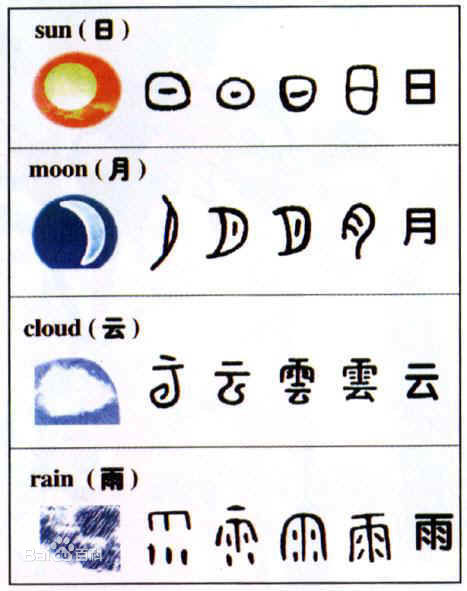
As I've noted elsewhere, Koreans love abstract art. When you think about Chinese script (which Koreans mostly used until the 1440s, when the hangeul alphabet was invented), the characters involve a certain amount of abstract thinking. The character for "big" or "great" is dae, and it looks like this: 大. Do you see a dude with outstretched arms (I love you thiiiiis much)? And look here to see the evolution of the character il/일/日, which means "sun" or "day." Many characters start off more concrete, then end up abstract, and many characters and phrases put together various ideas/concepts/images to form more ideas and concepts. For example, haksaeng/학생 is the Korean word for "student," and it comes from the hanja for "learning" and "life," hak/生 + saeng/生, i.e., one who devotes his life to learning. In learning the roots of words (Chinese is the East Asian analogue of Latin or Greek), it's good to learn the Chinese: that way, new words can be recognized or their meanings guessed at.
 |
| Hapgang Park Certification Center |
Some "certification centers" are tourist-trappy booths and not legitimate. If you're a cyclist, see whether the cert center in question is listed in your official stamp-collection passbook.
 |
| 10% grade coming up. |
 |
| hints of a city |
 |
| a smallish berm |
 |
| power lines and power towers |
 |
| the curve, the swerve |
 |
vertical script: "In nature, we see the future."
inside the purple region: "Hapgang Marsh" |
The term Hapgang/합강 could come from 合江 (seen on that bush-covered stone earlier), and that could mean (1) the coming-together (合) of rivers (江) as a generic, geographical term, or (2) a particular poet's pen name, or (3) the proper name of this region (derived from the geographical term). I don't know. Better minds than mine can clear up my ignorance in the comments.
 |
| sign for a drainage gate |
 |
| way at the bottom, where it's too late, a sign saying "danger of falling" |
 |
| A slight downhill is always nice. |
 |
| a shwimteo where I don't stop (but I'll be pausing soon enough) |
 |
| big ol' tree, 2:30 p.m. |
 |
| curving right |
Somewhere around here, I think, is where I rested and met the pleasant gentleman with whom I had—finally—had a decent conversation. He was in his 70s and still working, mainly as a way to stay active and useful. He had also done his share of walking.
 |
| these looked like skeletal zombie hands reaching up from the grave |
 |
| 115 km to the goal (which I won't reach, alas) |
 |
| more downhill (must be nice to coast while on a bike) |
 |
| at last—the wall of weird bicycle art |
 |
| From what universe were these plucked? |
 |
| And how many legs do the riders of that universe have? |
 |
| Which end is the front? |
 |
| "Zed's dead, baby. Zed's dead." (alternate-universe Bruce Willis and his bizarro chopper) |
 |
| heart-in-heart or Wolverine making a kissy face? |
 |
| Note how, for some of these, the art was fixed to the wall, then final spray-painting was done. |
 |
| for the rider with three layered pairs of buttocks |
 |
| alternate-universe Einstein or Tesla bike? |
 |
| Wheels need rides, too. |
 |
| The name's Wheel. Just Wheel. |
 |
| when the kid is running to catch up with Mom |
 |
| more post hoc spray-painting |
 |
| ...and we're done with the strange tribute to cyclists. |
 |
| edging ever closer to downtown |
 |
| CLOSER, I SAID |
 |
| Once again, we see the difference in quality between the walking path and the bike path. |
 |
| This is Haetmuri-gyo/햇무리교 (Haetmuri Bridge, i.e., Sun Dog Bridge). |
 |
| 3:32 p.m.—under-the-bridge culture |
Some Korean bridges are large enough to have their own parks and/or activity spaces (I doubt this is unique to Korea). Facilities range from simple benches to exercise equipment to stages to enough space for festivals and performances to set up shop. Bridge undersides provide travelers with protection from sun and rain and snow. The above looks particularly welcoming. But I'm not stopping here.
 |
| As long as the walking and bike paths are parallel, I stay on the walking path. |
But the moment there's a divergence: bike path. Sorry, bikers.
 |
| Like here, for instance. |
 |
| looking off to the left; apartments in the distance, creating their own microclimates |
 |
| X km to go |
 |
| afternoon sun and clouds |
 |
| Walking has turned into a bit of a slog by this point. I'm tired from a long and stressful day. |
VIDEO: Pedestrian bridge in Sejong City.
 |
| See what I mean by under-the-bridge culture? Bleachers. I bet they host concerts here. |
 |
| Seen from way above, this structure spans the river, and its center is a giant ring. |
 |
| I don't even know why I'm counting down the distance. |
 |
| But the walk must go on. Looking right, but not going that way. |
 |
| another footbridge |
 |
| This is the Jecheon-bohaenggyo/제천보행교, or Jae Creek Footbridge. |
 |
| Looking right; paths run along both sides of the water. |
 |
| looking left, where the creek has a distinctly different character |
 |
| observation deck (jeonmangdae/전망대) |
 |
| another slight uphill; I'll be crossing the upcoming bridge to get into town |
 |
| bloqué |
 |
| rude biker in the walking lane and coming toward me |
 |
| looking back at the 싸가지 없는 새끼 |
 |
| uphill, loop around, cross the bridge |
 |
| This is the Geumnam Bridge (Geumnam-gyo/금남교). |
I got to the top of the curving ramp that put me right at the bridge's end, but there was a park with shwimteo and benches there, so I rested a while before continuing.
 |
| 5:06 p.m.; I'm really slowing down now. My feet hurt. I bet I'm walking less than 3 kph. Shambling. |
 |
| But this lovely shot made it all worth it. Not professionalism—just coincidental timing. Luck. |
 |
| afternoon sun—the deity and its reflection |
 |
| a look right and down |
 |
| view blighted by more park golf as I cross to the other bank |
 |
| resolutely forward |
 |
| shwimteo—but nope, I've just rested, so I don't need it |
 |
| into town |
 |
| my first time in Sejong City |
This isn't going to please my conservative readers who hate top-down government and central planning (believe me, I sympathize), but my superficial impression of Sejong City, which is one of South Korea's planned cities, is that it's neat and organized. Now, I have no idea what sort of chaos, if any, might be going on behind the scenes, but that's the positive impression I got from my brief visit there—this is a clean and well-run urban space. I'm sure the flaws and strains will become visible eventually, as with any city, but for now, my first impression of Sejong is positive. Would I want to move there? Not right now: I'd need to learn a lot more about the rest of the city, and all I saw was the tiniest core sample. As Korean cities go, though, Sejong looks nice. My understanding is that it is or was supposed to be where South Korea should eventually move its capital (currently Seoul), and that some administrative offices have indeed moved to Sejong, but Seoul remains South Korea's official capital, and it will probably be that for some time. I'll have to look up timelines for whatever moves are still planned, and for when Sejong will be officially declared South Korea's new capital, if ever. Stay tuned.
Aside: moving the national capital away from the DMZ is a very good idea, I think, and for practical reasons of physical distance from conflict points.
 |
| UK English: zebra crossing (but no zebras in sight) |
At this point, I was about a kilometer away from my destination, the naughtily named Coupling Motel. I needed to go downhill toward a stream, then cross the stream, then turn left.
 |
| crossing the stream |
 |
| —but looking left before crossing |
 |
| Mrs. Mallards having a chat |
 |
| still chatting |
 |
| ...and here we are: the Coupling Motel/커플링 모텔/Keopeulling-motel. |
Getting a room was no trouble. I went next door to the restaurant to eat. The place specialized in meat dishes, especially pork, but they were the sort that you'd need to order a double portion of to get an order. When I got in, though, I saw that the menu had plenty of items for a single person to order, so I stuck with those. I moved over to the introvert section.
 |
| 6:15 p.m. |
I guess I forgot to take pics of my food. I was tired and hungry after a long and angry day. Click the links in the caption above to see what the dishes normally look like. Bibim-naengmyeon/비빔냉면 is spicy, cold noodles; and ureong doenjang-jjigae/우렁된장찌개 is a stew made with ureongi/우렁이, a type of small snail. It's quite good, especially once you dump rice into your soup bowl.
By the way, what Koreans call "stew" is not what we Westerners know of as stew. In the West, a stew simmers for a long time, allowing the ingredients to meld into a unified flavor. Korean stew, by contrast, usually comes to the table as a mass of prepped proteins and vegetables, then broth is added, and the whole thing is allowed to bubble away furiously for several minutes before the heat is finally turned down, and someone signals that it's time to eat. So Korean stew, perhaps reflecting Korean impatience, doesn't have the same sort of flavor-melding time in its preparation, which means you're tasting the individual elements of the stew much more distinctly. There's some degree of melding and unifying of tastes, but not nearly as much. It's not better or worse—just a different interpretation, is all.
A lot of Westerners visit Korea and fall in love with budae-jjigae/부대찌개 ("army-base stew" or "boot-camp stew"), a fusion of a standard, red-broth Korean stew (mildly spicy) and American "junk" meats like ground beef, spam, and sliced hot dogs. Some stew variations include pork and beans, slices of cheese, ramyeon, ddeok (rice cakes), and even pepperoni, bologna, pork belly, or salami. It's a wartime invention prompted by a dearth of regular Korean supplies, and it became a hit. It's also one of South Korea's most successful fusion foods. (Other peninsular fusion foods are a nightmare. Never invite me onto a world-food show on YouTube because I'd spend a lot of time talking shit about bad Korean fusion. There's just so much of it.)
Having eaten my fill, I went back to my room.
 |
| I was starting to fall asleep as I began writing my blog entry. |
 |
Motel rooms usually offer bottled water (in half-liter bottles), small canned drinks (fruit juice, coffee, tea, etc.), and little "sticks" of instant coffee. The stingier motels don't offer the canned drinks, and the really stingy motels don't even offer you two sticks of coffee: You get only one. If that. |
So that was my first day of walking: psychologically and physically taxing, but I survived it, managed to crank out a blog post, and lived to schlep another day.


Yikes! Hopefully, all the bad interactions are out of the way now. You were still standing at the end of the day, so that's a win. As always, I enjoyed the photos. Good luck with Day 2!
ReplyDeleteI would have been a bit miffed, too, had some kid called me 할아버지, but I can almost guarantee you it wasn't meant as an insult--kids do this all the time with people they perceive as "elderly." It is indeed a sign of respect, even if a bit off the mark.
ReplyDeleteFor what it's worth, though, you're not the only one who finds it annoying. I remember once HJ and I were in a department store and some young sales guy called her 어머니. She snapped, "I'm not your mother!" I had to stifle a laugh. And I remember the first time I was called 아저씨, by a little girl in a playground when I was still in my early twenties. That stayed with me for the whole day. Heck, it's stayed with me for the past thirty years.
Moral of the story: Intention and effect don't always line up.
Wow! That was a LOT of photos! I'm not complaining, though. Seeing the views is the next best thing to being there. I couldn't do those distances, but I'd love to walk that path in 10K bites. I miss Korea.
ReplyDeleteA long day that didn't start well. Glad it is over and you will move on tomorrow. I will have to try to find some more information on Sejong City. I don't object at all to city planning. Especially if a city is built up out of nothing. It makes sense to plan it in an orderly, rational, way. I have always been a little fascinated by Brasilia and how it has been a failure. Then again, you have, near the home of our youth, Reston. Which was a good idea that was well executed initially and then became overrun by suburban sprawl. Good luck tomorrow.
ReplyDelete